Alex Henderson
Journalist, Political Reporter, Cultural Critic, Editor/Proofreader
Alex V. Henderson
Philadelphia, PA
vixenatr

- Home
- Articles on Political, Social, Legal and Business Topics

- Political Commentaries
- Arts & Entertainment
- Bios For Record Companies: Rock
- Bios For Record Companies: Jazz Instrumentalists
- Bios for Record Companies: R&B and Hip-Hop
- Bios For Record Companies: Jazz Vocalists
- Liner Notes, Jazz Instrumentalists
- Liner Notes: Jazz Vocalists
- Magazine Articles: Jazz
- Magazine Articles: R&B
- Liner Notes: R&B
- Liner Notes: Hip-Hop
- CD Reviews
- Travel Photos
- Technical Writing
- Blogs
- Links
The New York City Jazz Record,
October 2017
Label Spotlight: Southport
By Alex Henderson
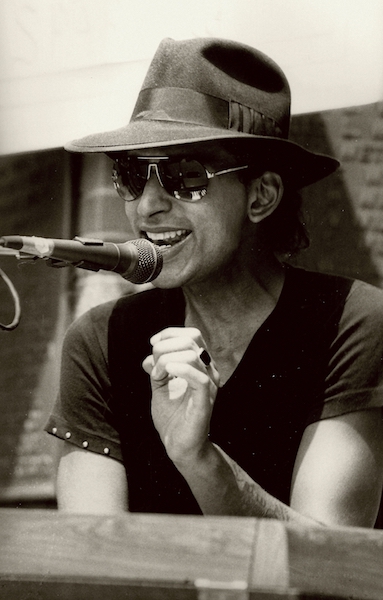
Bradley Parker-Sparrow has been celebrating two anniversaries in 2017. It was 40 years ago that the pianist, composer, producer and engineer founded Southport Records as well as his recording studio, Sparrow Sound Design, in his native Chicago. And having released more than 145 albums along the way, Southport has shown itself to be one of the most durable independent labels when it comes to recording jazz in the Windy City.
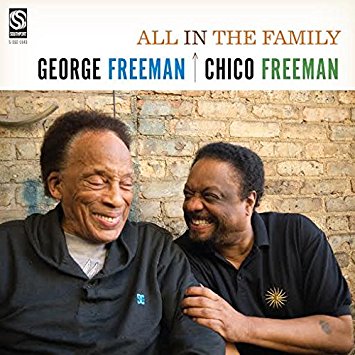
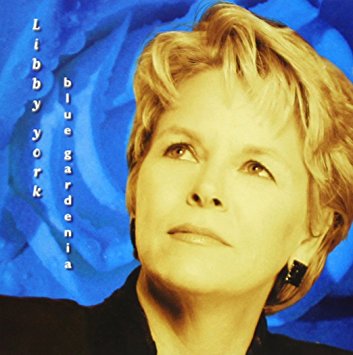
The list of jazz instrumentalists who have recorded for Southport over the years is a long one, ranging from saxophonists Von Freeman, Fred Anderson, Roscoe Mitchell and Joseph Jarman to trumpeter Bobby Lewis, bassists Malachi Favors and Tatsu Aoki and pianists King Fleming and Willie Pickens. Southport has recorded many singers as well, including Katherine Davis, Libby York, Eden Atwood, April Aloisio and Sparrow’s wife Joanie Pallatto, who has been running the company with him since the early ‘80s.
Although Southport is closely identified with jazz, Chicago native Sparrow is quick to point out that his label has recorded many other styles of music as well.
“You know, I think the amazing thing is that we’re reaching 147 individual projects—and most or all are still in print,” observes Sparrow, now 63. “We haven’t just stayed with jazz and blues. There’s almost like a caste system in this country where you have to have an association with a group of musicians—I’m a jazz person, I’m classical, I’m hip-hop—but we’ve been all over the map, which is probably to our detriment. We’ve done a lot of experimental avant garde classical, like George Flynn. We’ve done Latino music, going back to David Hernandez—the Puerto Rican poet—in 1980. And we’ve recorded jazz legends that no one else was recording in Chicago, like Willie Pickens, Von Freeman, George Freeman, Tatsu Aoki, King Fleming.”
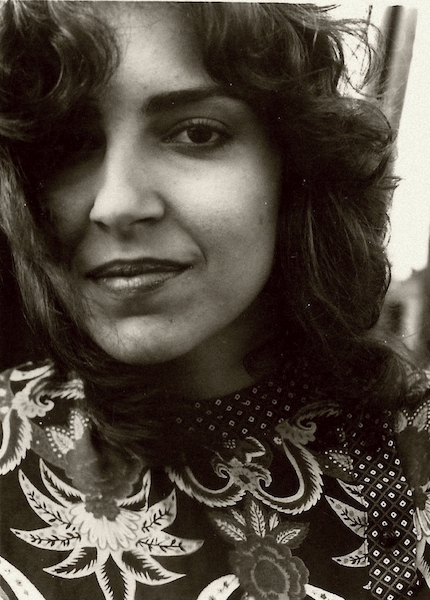
Pallatto, originally from Ohio and also 63, has been with Southport throughout most of its history. After seeing Sparrow performing at the Chicago Jazz Festival in 1979, she met him in person the following year when he heard her performing at a no-nukes benefit show and asked her to join the group he had at the time. They were married in 1982 and will be celebrating their 35th wedding anniversary in November. Pallatto points out that Sparrow’s legacy includes not only all the albums released on Southport, but also, the numerous albums that were recorded in his studio and released on other labels.
“I think a lot of the artists who came to us in the early days were attracted to the sound we had to offer in the studio,” Pallatto remembers. “When we found our big Baldwin Concert Grand Piano, it attracted a lot of the pianists. Willie loved it, King loved it. As the development of our label grew, we were a recording studio open for business; we had clients. It wasn’t just the recordings that we released on Southport—it was any number of recordings that we produced for other artists on their own label or other labels. That was all part of the evolution as well. There were a lot of recordings; we still have reels and reels of analog tapes in the basement.”
Sparrow and Pallatto have been celebrating the 40th anniversary of Southport and Sparrow Sound Design with a series of concerts in Chicago and the celebration will continue this month in Manhattan at Café Noctambulo at Pangea featuring veteran singer Bob Dorough.
Technologically, Southport has witnessed many changes during its 40-year history. When Sparrow founded the label during the Jimmy Carter years, LPs were the dominant format for recorded jazz. In the late ‘80s, CDs became jazz’ format of choice. And in 2017, many listeners under 25 obtain all of their music via downloading, which Sparrow finds regrettable. Physical products, he stresses, have been a valuable part of the jazz experience.
“I’m still not a fan of digital cloud activity because I think that one day, it’s all going to just disappear,” Sparrow asserts. “I think people should have a physical item with graphics so that they can have their own personal libraries. Sometimes, things do disappear in the clouds. It’s sad, but it’s really hard to sell CDs now. They don’t have CD players in cars; they don’t put CD drawers in laptops. But CDs are an excellent idiom. Vinyl was very difficult and hard to make.” Sparrow adds, “When the graphics and the photographs get separated from the sound, it’s going to be really hard, 50 years from now, to put them back together.”
Sparrow and Pallatto, after many years in the music industry, see nothing wrong with musicians finding income streams outside of music. When they aren’t running Southport Records and Sparrow Sound Design, they are renting out apartments they own in Chicago.
“You have to be diverse,” Sparrow notes. “The politics of begging for gigs is absurd, especially as you get older, because there is always someone who will take the gig for a dollar less.”
As Southport grew and progressed in the ‘80s-90s, Sparrow often found himself being compared to another entrepreneur known for recording jazz in Chicago: Bob Koester, president of Delmark Records. Koester’s label has been around longer: the St. Louis native founded Delmark in 1953 and is still running it at 84. But even so, the parallels are hard to miss.
“I started the label so I could get my first record out there,” Sparrow recalls. “There was Bob Koester and Delmark Records, but it’s not like there were ten other labels in Chicago fighting to produce Willie Pickens or Von Freeman. And that made it easier for us to get jazz legends like them.”
Pallatto interjects, “Willie Pickens and Von Freeman, who we would call our friends, really did us the honor—and kind of a favor—by being our flagship artists. They really put Southport Records on the map. Von, of all people, brought so many projects into the studio. He brought Yusef Lateef.”
Sparrow estimates that “probably 95 or 96%” of the artists who have recorded for Southport have some type of Chicago connection and Chicago, Sparrow and Pallatto stress, will continue to be an important part of Southport’s identity.
“Chicago is kind of like a midget big city,” Sparrow explains. “It’s smaller populationwise than New York, but it’s always had its neighborhoods divided by viaducts and race and different things. It’s always had pockets with different types of music.”
For more information, visit chicagosound.com. The Southport Records 40th Anniversary Celebration is at Café Noctambulo at Pangea Oct. 23rd. See Calendar.

Alex V. Henderson
Philadelphia, PA
vixenatr